


To view a larger image, please click here or hover over the photo above.
Author: Gio. A. Magini
Year/Period: 1600 ca.
| Size: | Inches: | 40 x 32 |
| CM: | 100 x 80 |
Price: $859.99
SKU:
Other Images:
Description:
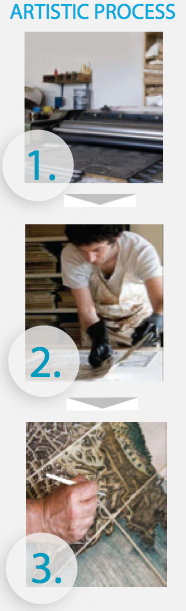
We suggest you to take a look at the artistic process shown on the left side of the page or by clicking on the link available on the right side you can see the video showing the entire artistic process.
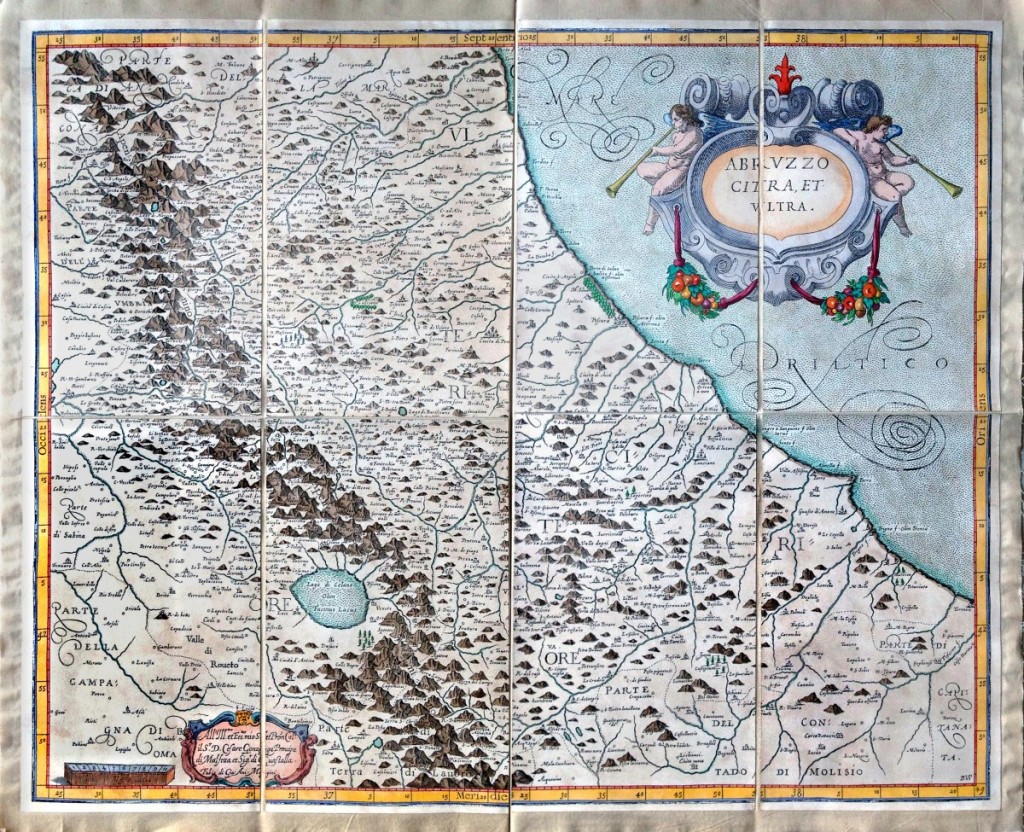
Abruzzo Citra or Abruzzo Citeriore was a province of the Kingdom of Naples established in 1273 by Charles of Anjou when he divided Giustizierato of Abruzzo (founded by King Frederick II) into two parts: Ultra flumen Aprutium Piscariae (Aprutium beyond the Pescara river) and Aprutium citra flumen Piscariae (Aprutium South side of the Pescara river).
Abruzzo Citra was located south of the Pescara river and within the area of today’s Abruzzo region of Italy, for the most part within the present Province of Chieti; the seat was the city of Chieti.
Abruzzo Ultra had instead at that time seat to Aquila and embraced the north of Pescara river and the borders of "the giustizierato" embraced the area of today’s provinces of Aquila, Teramo, it included also most part of the the present Province of Pescara, it was even included partial North East side of the province of Rieti ( nowadays province of the Latium region)
The borders of all the territories starded from north east side of the Tronto river going all the way down to the south of the Pescara river, including also the north west side of the Gran Sasso mountain chain.
Giovanni Antonio Magini (in Latin, Maginus) (June 13, 1555 – February 11, 1617) was an Italian astronomer, astrologer, cartographer, and mathematician. In 1588 he was chosen over Galileo to occupy the chair of mathematics at the University of Bologna after the death of Egnatio Danti. Magini supported a geocentric system of the world, in preference to Copernicus’ heliocentric system. As a cartographer, his life's work was the preparation of Italia or the Atlante geografico d'Italia (Geographic Atlas of Italy), printed posthumously by Magini's son in 1620.
Engraving Information:
This artistic reproduction of a vintage map was made using modern graphic procedures, but obtaining the results found in the antique copperplate engraving technique, as one can easily find out by lightly rubbing his/her finger on the map. This map, which is an exact reproduction of the original antique, is printed on cotton paper panels which are glued and mounted on a cotton cloth background "a stacchi" (slightly separated from each other), in order to allow for folding and easier transport. Finally, map is water-colored by hand making it a truly unique piece, worthy of the original old print.